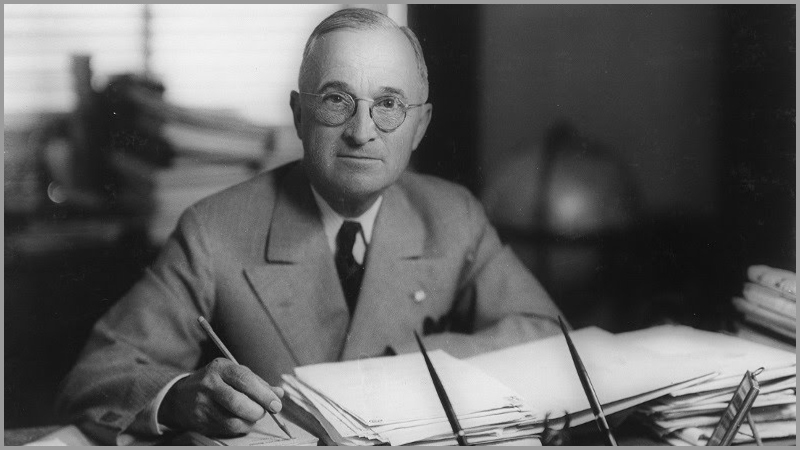
In U.S. history, presidents have often introduced major programs to improve life for everyday Americans. One important example is the Fair Deal, a set of proposals put forward by President Harry S. Truman after World War II. If you’re taking AP U.S. History (APUSH), it’s essential to understand what the Fair Deal was, what it aimed to do, and how it shaped postwar America.
This guide breaks down the Fair Deal definition for APUSH in clear, easy-to-understand terms. We’ll cover its goals, key policies, and its overall impact on American society—perfect for studying for a test or just learning more about this important chapter in U.S. history.
What Was the Fair Deal? | Fair Deal APUSH Definition
In AP U.S. History, the Fair Deal refers to President Harry S. Truman’s domestic policy agenda, introduced in 1949 during his State of the Union address. It aimed to continue and expand the New Deal programs started by Franklin D. Roosevelt.
The Fair Deal focused on improving life for everyday Americans—especially workers, farmers, and the poor—by promoting economic fairness, social welfare, and civil rights.
Key Goals of the Fair Deal:
- National health insurance for all Americans
- Raising the minimum wage
- Improved housing for low-income families
- Civil rights legislation to end racial discrimination
- Expanded Social Security benefits
- Federal funding for education
Although Truman faced resistance from Congress and many of his proposals were not passed, the Fair Deal set the stage for future reforms and reflected a growing push for equality and economic opportunity in postwar America.
Key Goals of the Fair Deal
Truman’s Fair Deal had several major goals. Let’s look at each one:
1. Health Insurance
One of the most ambitious parts of the Fair Deal was national health insurance. President Truman believed that all Americans should have access to affordable medical care, and he proposed a plan for the government to help cover healthcare costs.
However, Congress rejected the proposal. Many lawmakers argued it would be too expensive, while others criticized it as being too similar to socialist policies.
2. Raising the Minimum Wage
To support working families, Truman pushed to raise the federal minimum wage as part of the Fair Deal. In 1949, Congress approved the increase—from 40 cents to 75 cents an hour.
This was one of the Fair Deal’s key successes, providing a boost to millions of low-wage workers across the country.
3. Housing Programs
Another major goal of the Fair Deal was to address the housing shortage for low-income families. The Housing Act of 1949 was passed to fund the construction of public housing and improve urban living conditions.
This was a significant victory for Truman, as it helped provide better homes for many Americans living in poverty.
4. Civil Rights and Equality
Truman was one of the first presidents to take meaningful steps toward civil rights. He desegregated the U.S. military and issued an order to ban racial discrimination in federal employment. He also urged Congress to pass stronger civil rights legislation.
Although Congress did not approve these new laws during his presidency, Truman’s efforts laid the groundwork for the Civil Rights Movement that followed in the 1950s and 1960s.
Opposition to the Fair Deal | Fair Deal APUSH Definition in Context
Although the Fair Deal aimed to expand opportunity and improve life for Americans, it faced strong opposition in Congress. Many Republicans and Southern Democrats disagreed with Truman’s proposals and worked to block them.
Critics argued that the federal government was gaining too much power, and many were concerned about the cost of these programs. As a result, only a few parts of the Fair Deal were passed into law.Still, the Fair Deal remains significant in APUSH. It represents Truman’s attempt to extend the New Deal and reflects the early development of modern liberal policies in American politics.
Successes and Failures of the Fair Deal
What Worked?
- Minimum wage increase
- Housing Act of 1949
- Expansion of Social Security
These policies helped working-class families and set the stage for later reforms in the 1960s.
What Didn’t Work?
- National health insurance
- Federal aid to education
- Full civil rights legislation
Though these parts failed, the ideas did not disappear. Later presidents picked them up in future policies.
Why the Fair Deal Matters in APUSH | Fair Deal APUSH Definition in Focus
In APUSH, understanding how presidents shaped American society is key—and the Fair Deal is a great example of that. It highlights President Truman’s efforts to expand reform after World War II and the challenges of pushing change in a divided government.
When studying the Fair Deal APUSH definition, remember these key points:
- Truman aimed to build on the New Deal with new reforms.
- It focused on healthcare, housing, higher wages, education, and civil rights.
- Many proposals were blocked, but the Fair Deal helped inspire future reforms in American policy.
Lasting Legacy of the Fair Deal
The Fair Deal helped shape the direction of the Democratic Party. It pushed ideas that would grow stronger in the 1960s, such as Medicare and civil rights laws.
Even though not all goals were achieved, Truman’s plan changed how Americans thought about the role of government. It showed that federal power could be used to fight poverty, support workers, and promote fairness.
Conclusion
The Fair Deal was President Truman’s plan to improve life in post–World War II America by expanding on the New Deal. Although many of its proposals were blocked by Congress, the Fair Deal still had a lasting impact.
It raised the minimum wage, expanded Social Security, and funded public housing. It also helped lay the foundation for future progress in civil rights and healthcare. Understanding the Fair Deal helps explain how American domestic policy evolved during the mid-20th century.
For More Information Or Suggestions, Please Contact Us.