
The story is about a man who stays far from the noise of fame, yet becomes the quiet foundation of someone else’s success.
Paul Werdel is a name many may not recognize, but he’s an unseen part of Amna Nawaz’s story.
When Amna stands before the world—fearless, confident, and full of purpose—few realize that behind her is someone who’s always been her quiet strength.
Paul never stands on a stage, holds no microphone, gives no grand speeches—but his presence is a constant support, a calm that turns exhaustion into strength.
He’s never sought attention, nor chased fame. For him, success has always meant seeing the people he loves find happiness.
And perhaps that’s the truest victory of all—to live away from the spotlight, yet still be the reason someone else’s world shines brighter.
The Man Behind the Spotlight — Paul Werdel’s Quiet Triumph
Often, when we see a news anchor on screen, all the light seems to belong to that one face.
But behind every successful face, there’s someone quietly building the foundation of that story.
Paul Werdel is one of those people — far from the spotlight, yet deeply influential.
The world mostly knows him as “Amna Nawaz’s husband,”
But his identity goes far beyond that.
He’s a thoughtful architect who helped shape the modern landscape of digital journalism.
He doesn’t speak much, but his work speaks louder than words —
creating pathways for storytellers, so their voices can reach millions of hearts.
A Mind That Wanted News to Reach the Heart — Paul Werdel’s Vision
Paul Werdel’s story isn’t that of an ordinary product manager — it’s the story of a man who believed journalism should have a soul.
When he joined The New York Times, one thought kept echoing in his mind:
“Why should truth only be read — why not felt?”
That question became his mission.
He worked on projects that transformed news from something printed on paper or displayed on a webpage into something alive — right there on the screens we hold in our hands.
His vision was simple yet revolutionary: to bring journalism closer to the modern reader, to make news not just something you scroll through, but something you experience.
Few may have written about it,
but Paul Werdel is one of those quiet innovators whose ideas gave birth to platforms like NYT Now.
It seemed like just another app —
But in truth, it changed the way people engaged with news.
And that subtle, silent impact is where Paul Werdel’s true brilliance shines.
Where the Husband Chose Sacrifice, the Wife Conquered the World
Paul and Amna Nawaz’s story isn’t just that of a “media couple” —
It’s the story of two dreamers who learned the true meaning of sacrifice for one another.
When Amna’s career reached its peak and she stood tall on the PBS NewsHour stage with her powerful voice,
Paul made a choice that few dare to make.
He stepped back from his own thriving career to focus on their home and children —
because for him, success was never about titles or fame, but about family and joy.
It’s a side of their story that no headline or blog has ever told,
because Paul never lived his life for publicity.
He proved that real strength doesn’t come from how brightly you shine —
But from how much light you give to help others shine.
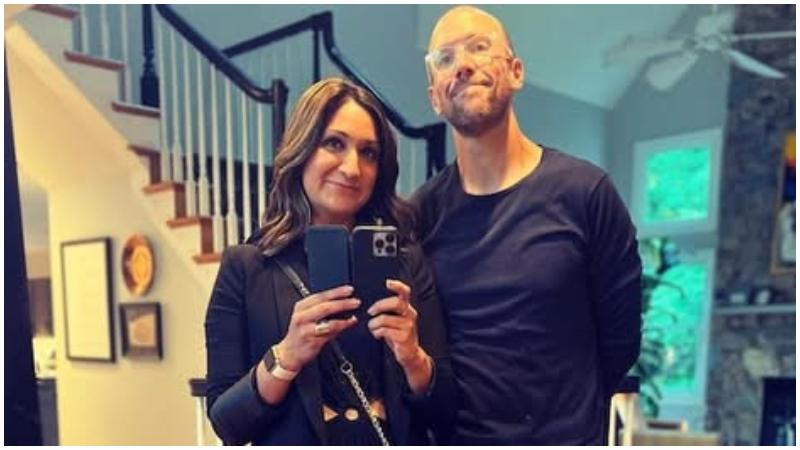
Where voices fade, Paul’s vision speaks.
He belongs to that rare kind of people who don’t need the spotlight to be recognized — only an eye that understands.
He never stood before cameras, yet his ideas reshaped the landscape of journalism.
His work may never have made the headlines, but its influence echoes through every story rooted in truth.
He proved that a true hero isn’t the one who gathers applause —
but the one who quietly empowers others so deeply that the world begins to call them role models.
Silent Triumph — The True Brilliance of Paul Werdel
Paul Werdel’s life is a quiet lesson.
He’s one of those rare people who don’t seek to prove anything to the world — they find peace in watching someone else’s dreams come true.
Behind Amna’s success lies his strength, his sacrifice, and his silent support — the kind of foundation the world may never see.
But that’s the truest kind of victory — not the one found in fame or applause,
but in that quiet moment when you see someone you love succeed,
and smile to yourself, whispering:
“Yes, this too is my victory.”